
When Should I Worry About Chest Pain?
Most chest pain is not caused by the heart, but some chest pain needs a 999 call straight away. Call 999 if you have sudden chest pain or discomfort that does not go away, if it feels like squeezing, pressure, burning or indigestion, if it spreads to your arm, neck, jaw, stomach or back, or if it comes with sweating, feeling sick, light-headedness or breathlessness. These are the warning signs of a possible heart attack, and they should never be waited out at home.
If your chest pain comes and goes, or passed quickly but you are still worried, book an appointment with your GP or a cardiologist. Pain that appears when you walk uphill or climb stairs and settles when you stop is the pattern that most needs checking, because it can be angina. Below we explain how heart pain usually feels, what else commonly causes chest pain, why pain on the left side is not always the heart, and the tests used to find the cause.
How heart related chest pain usually feels
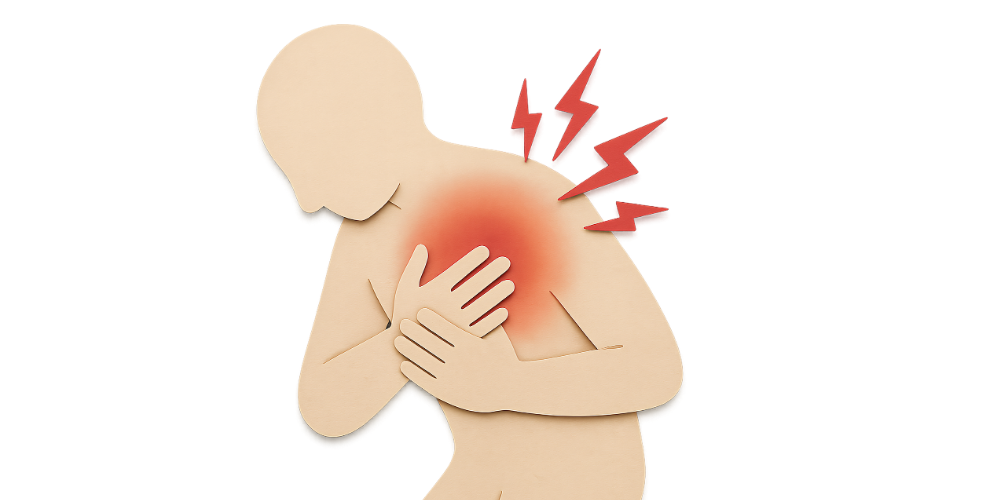
Pain from the heart tends to be a pressure, tightness, heaviness or squeezing across the chest rather than a sharp, pinpoint pain. The British Heart Foundation describes angina as a feeling that may also be felt in the shoulders, arms, neck, jaw, back or stomach, sometimes with breathlessness, sweating, nausea or dizziness.
The trigger matters as much as the feeling. Stable angina usually comes on with physical effort, emotional stress, cold weather or after a large meal, and lasts five minutes or less before easing with rest or medicine. This happens because the coronary arteries have narrowed and cannot deliver enough blood to the heart muscle when it is working harder.
A heart attack is different. The pain is usually more severe, does not settle with rest and can start when you are sitting still. If you think you are having a heart attack, call 999, sit down and rest, and take a 300mg aspirin if one is to hand and you are not allergic to it.
Common causes of chest pain that are not the heart
Many people who come to see us expect to hear the word heart, and are relieved to find the cause lies elsewhere. According to the NHS, the most common causes include the following.
- Heartburn and indigestion. Acid reflux causes a burning pain behind the breastbone, often after eating or when lying down, sometimes with a sour taste in the mouth.
- Muscle and rib pain. Strains from exercise, lifting or coughing are common. Costochondritis, inflammation where the ribs join the breastbone, causes sharp pain that is often worse when you press on the chest.
- Anxiety and panic attacks. Panic attacks can cause chest pain together with a racing heart, sweating and breathlessness, which understandably feels very like a heart problem.
- Chest infections and pleurisy. Pleurisy causes a sharp pain when you breathe in, cough or sneeze, often after a chest infection.
These causes are far more common than heart disease, but they can overlap with heart symptoms. Indigestion and angina can feel almost identical, which is why anyone with risk factors such as smoking, diabetes, high blood pressure or high cholesterol should not assume heartburn without having it checked.
Is pain on the left side of the chest always the heart?
No. The heart sits in the middle of the chest, tilted slightly to the left, so heart pain is more often felt across the centre than on the left side alone. Sharp pain that you can point to with one finger, that changes when you press on it, twist or take a deep breath, or that lasts only a second or two, usually comes from the chest wall, the ribs or the lining of the lungs.
That said, left sided pain should not be ignored when it comes on with exertion, spreads into the left arm, shoulder or jaw, or comes with breathlessness. Arm pain together with chest discomfort is a recognised pattern in heart conditions that cause arm pain, including angina and heart attack. If you are unsure, it is always safer to be assessed.
Other heart and lung causes that need prompt attention
Not every serious cause of chest pain is a blocked artery. Several other conditions need medical attention quickly.
- Pericarditis. Inflammation of the sac around the heart causes a sudden, sharp, stabbing pain that is often worse when you breathe deeply or lie down. Pericarditis needs assessment the same day.
- Pulmonary embolism. A blood clot in the lungs causes sudden breathlessness and chest pain that is worse when you breathe in, sometimes with coughing up blood. Pulmonary embolism is an emergency.
- Aortic dissection. A tear in the main artery from the heart causes sudden, severe tearing pain in the chest or back. It is rare but life threatening, and needs a 999 call.
- Microvascular angina. Some people, more often women, have angina caused by the smallest blood vessels of the heart rather than the main arteries. Microvascular angina can be missed when tests of the larger arteries come back clear.
Chest pain in women
Women and men generally have the same heart attack symptoms, but research shows women tend to be slower to recognise them as a heart attack and to seek help. Women are also more likely to have microvascular angina and conditions such as spontaneous coronary artery dissection, which can affect younger women with few traditional risk factors. If you are a woman with chest pain that matches the warning signs above, take it as seriously as you would for anyone else.
When to see a cardiologist
The NHS advises seeing a GP for chest pain that comes and goes, or that has passed but still worries you. A cardiology assessment is worth considering when the pain is linked to exertion, when it keeps returning, when you have risk factors or a family history of heart disease before the age of 60, or when you want answers sooner.
We’ve found that many people who contact us are unsure whether their chest pain is serious, and some have lived with that uncertainty for months. From working with patients across Kent and East Sussex since 2006, we’ve found that a clear history of when the pain starts, what eases it and how long it lasts is the most useful information you can bring. It often points towards the right test before any investigation begins. Writing down a few episodes before your appointment makes a real difference.
Our consultant cardiologists also hold NHS posts at Tunbridge Wells Hospital and King’s College Hospital, including roles in the region’s emergency cardiac and heart attack services. That means a private appointment at our Warwick Park rooms is with the same specialists who treat chest pain in local hospitals every week.
How chest pain is investigated
The first test is usually a 12 lead ECG, which records the heart’s electrical activity and can show signs of a past or current heart attack, strain on the heart or a rhythm problem. Blood tests check cholesterol, blood sugar and other markers. An echocardiogram uses ultrasound to show how well the heart pumps and whether the valves and the lining around the heart look normal.
If angina is suspected, the next step is a test that looks at the coronary arteries. In our experience, a CT coronary angiogram works better than an exercise ECG for investigating new chest pain that might be angina, because it shows the arteries directly rather than inferring narrowing from changes on a trace. This matches NICE guidance on recent onset chest pain, which since its 2016 update recommends CT coronary angiography for people with suspected angina, and has not recommended the exercise ECG for diagnosing new coronary disease since 2010.
An exercise stress test still has a valuable role in showing how your heart copes with exertion and how fit you are. A CT calcium score can add information about your long term risk. If a significant narrowing is found, an invasive coronary angiogram can confirm it and, where needed, allow angioplasty to open the artery during the same procedure.
Most of these diagnostic tests are carried out on site at Warwick Park, and our practice nurses explain what each one involves when you book. We aim to send a summary to your GP within 24 hours.
Reducing your future risk
Whatever the cause of your chest pain turns out to be, the same steps protect your heart over time. Stopping smoking is one of the most effective changes you can make. Keeping blood pressure and cholesterol under control, staying active, maintaining a healthy weight and managing diabetes all reduce the chance of coronary heart disease developing or progressing.
If you are between 40 and 74, the free NHS Health Check assesses your risk every five years. Stress also plays a part, and recognising how closely anxiety and restlessness can mimic heart symptoms can help you decide when to seek reassurance. For those who want a fuller picture, our HeartScreen programme combines a consultation, ECG, cholesterol test, echocardiogram and exercise test in a single visit of around two hours, followed by a review and written report.
Conclusion
Chest pain is worth worrying about when it is sudden, severe or does not go away, when it spreads to your arm, jaw, neck or back, or when it comes with sweating, sickness or breathlessness. In those situations, call 999. Pain that comes on with exertion and settles with rest also needs checking soon, even if it feels mild. Most other chest pain has a harmless cause, but a proper assessment is the only way to be sure.
If you would like your chest pain assessed by a consultant cardiologist, West Kent Cardiology Partnership offers prompt appointments in Tunbridge Wells, including some evening and Saturday clinics. Contact us or call 01892 526726 to book.
