

What Heart Conditions Might Anxiety and Restlessness Indicate?
Feelings of anxiety and restlessness are, in the great majority of cases, caused by stress, worry, or an anxiety condition rather than anything wrong with the heart. But there is an important overlap that often causes confusion. The physical sensations we recognise as anxiety, such as a racing heart, restlessness, a tight chest, and a sense of unease or dread, are produced by the body’s fight-or-flight response, and that same response can be triggered by a heart problem. This means that in some people, an undiagnosed heart condition, particularly a rhythm disturbance, can produce genuine physical anxiety and restlessness that gets labelled as purely psychological.
The heart conditions most commonly linked to anxiety and restlessness are arrhythmias such as atrial fibrillation and supraventricular tachycardia, and less often angina, heart attack, and heart failure. In our experience at our Warwick Park rooms in Tunbridge Wells, the patients most often affected are those who have been told their symptoms are “just anxiety” but whose episodes come on suddenly, without an obvious trigger, and with a strong physical component. From working with patients across Kent and East Sussex since 2006 at West Kent Cardiology Partnership, we have found that while most turn out to have a primary anxiety cause, there is an important minority in whom a heart rhythm problem is driving the symptoms, and identifying it changes everything about how they are treated.
Why the heart can cause feelings of anxiety
The link comes down to the autonomic nervous system, which controls the body’s automatic functions. When it senses a threat, it releases a surge of adrenaline that raises the heart rate, tightens the chest, quickens the breathing, and produces a restless, on-edge feeling. This is the fight-or-flight response, and it is exactly what we feel as anxiety.
The key point is that this response can be set off by the heart itself, not only by the mind. When the heart suddenly beats abnormally, the brain often registers the change as danger and triggers the same adrenaline surge, producing feelings of anxiety and restlessness before the person is even aware of anything happening to their heartbeat. In our experience, this is why some people describe a wave of dread or panic that seems to come from nowhere, only for a heart rhythm problem to be found when we monitor them.
Arrhythmias
Heart rhythm disturbances are the cardiac conditions most likely to be mistaken for anxiety. In conditions such as atrial fibrillation and supraventricular tachycardia, the heart suddenly beats fast or irregularly, and the resulting adrenaline surge produces palpitations alongside restlessness, breathlessness, light-headedness, and a sense of unease. Many patients experience their heart racing or pounding, particularly when lying down or trying to rest, which adds to the feeling of being unable to settle.
In our experience, arrhythmia-related anxiety usually comes in distinct episodes that start and stop, rather than the more constant background worry of a primary anxiety condition. In our experience, investigating unexplained anxiety-like episodes with a period of heart rhythm monitoring works better than assuming they are purely psychological, because a recording can reveal whether an abnormal heartbeat is coming first and triggering the anxiety, rather than the other way around. From working with patients, we have found that this distinction is one of the most valuable things a proper assessment can establish.
Angina and heart attack
A sense of impending doom, restlessness, and agitation is a recognised feature of a heart attack, and in some cases these feelings appear before or alongside the more familiar chest discomfort. Angina, caused by reduced blood flow to the heart muscle, can produce a similar sense of unease during episodes brought on by exertion or stress. In our experience, the feature that should raise concern is anxiety or restlessness that comes with chest tightness, breathlessness, or is brought on by physical effort, rather than appearing at rest with no physical symptoms.
Heart failure
In heart failure, the heart cannot pump efficiently, and reduced oxygen delivery combined with breathlessness can produce restlessness and agitation, particularly at night when lying flat makes breathing harder. This kind of restlessness is usually accompanied by breathlessness, fatigue, and swelling of the ankles, and rarely occurs on its own.
An overactive thyroid
It is worth mentioning that an overactive thyroid is a common cause of both anxiety and heart rhythm problems at the same time, because it speeds up the whole body. It can cause anxiety, restlessness, a racing heart, tremor, and atrial fibrillation together, which is why we check thyroid function as part of the assessment. It is a good example of a single, easily treated cause producing what looks like both a psychological and a cardiac problem.
When it is genuinely anxiety
It is important to be clear that anxiety is real, common, and highly treatable, and that most anxiety and restlessness has a psychological rather than a cardiac cause. Panic disorder and generalised anxiety are far more frequent explanations than any heart condition. Features that point towards primary anxiety include a clear emotional trigger, symptoms that peak within around ten minutes and then ease, tingling around the mouth or fingers from over-breathing, and a background of persistent worry. Anxiety and heart conditions can also coexist, and treating one does not mean ignoring the other. Our aim is never to replace mental health support, but to establish whether the heart is contributing so that the right treatment can be given.
How to tell the difference
The overlap is genuine, which is why the two are so often confused. From working with patients, we have found that the most useful pointers towards a cardiac cause are episodes that begin with the physical sensation rather than the emotion, that come on suddenly at rest or during exertion without an obvious trigger, and that are associated with a noticeably irregular or very fast pulse. Anxiety-like symptoms that are accompanied by dizziness or light-headedness on standing are also worth assessing, as they can reflect an underlying cardiovascular cause.
How it is investigated
Assessment begins with a careful history and examination, followed by an ECG to check the heart’s rhythm, blood tests including thyroid function, and an echocardiogram where heart structure needs assessing. Because rhythm problems are usually intermittent, ambulatory monitoring with a 24-hour ECG recording or a 7-day cardiac event recorder is often the most valuable test, as it can capture exactly what the heart is doing during an episode. Most of these tests can be arranged on-site at our Tunbridge Wells clinic and are included in our HeartScreen programme.
When to seek urgent help
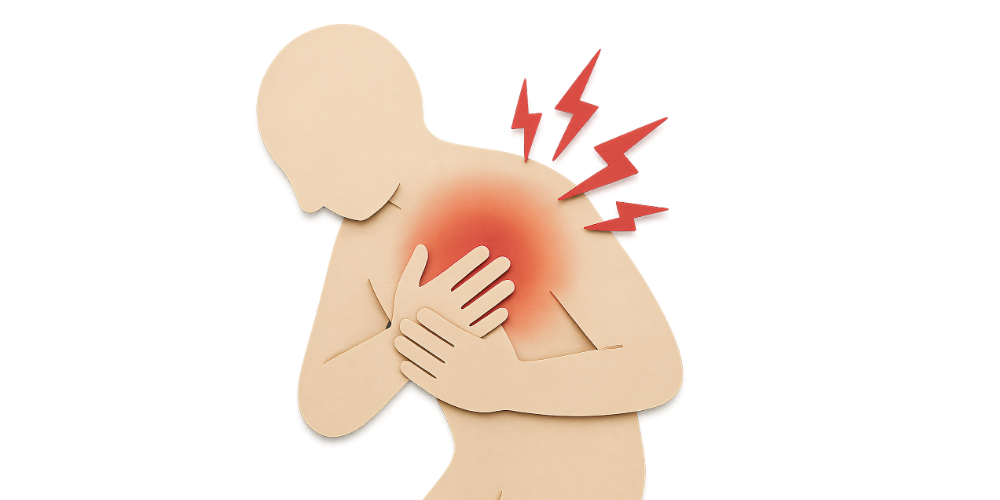
Call 999 if anxiety or restlessness is accompanied by chest pain or pressure, severe breathlessness, or pain spreading to the arm, jaw, or neck, as these can indicate a heart attack. Otherwise, if you have recurrent episodes that you are not sure about, a cardiology assessment can establish whether your heart is involved and provide reassurance either way.
Conclusion
Anxiety and restlessness are usually psychological, but because they are produced by the body’s fight-or-flight response, they can also be triggered by a heart problem, most often a rhythm disturbance such as atrial fibrillation. The pattern that should prompt a cardiac assessment is episodes that begin with the physical sensation, come on suddenly without a trigger, or are associated with an irregular or racing pulse. Establishing whether the heart is contributing means the right treatment can be given, whether that is for the heart, for anxiety, or for both.
If you have been experiencing anxiety and restlessness that you are not sure about, particularly with any of these features, you can contact us, Dr Clive Lawson and Dr Derek Harrington at West Kent Cardiology Partnership, to arrange a consultation at our Tunbridge Wells clinic, or call us directly on 01892 526726.
