

What is a blood pressure monitor?
What Is a Blood Pressure Monitor?
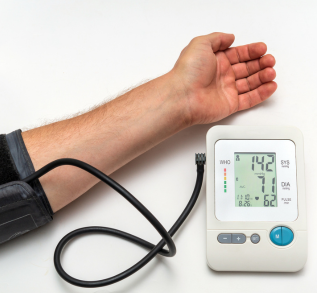
A blood pressure monitor is a device that measures the force of blood pushing against the walls of your arteries as your heart pumps. It gives two numbers, both measured in millimetres of mercury (mmHg). The first and higher number is the systolic pressure, the peak force when your heart contracts and pushes blood out. The second and lower number is the diastolic pressure, the lowest force your blood pressure reaches when the heart relaxes between beats. A reading of 120/80 mmHg means a systolic pressure of 120 and a diastolic pressure of 80.
Most monitors sold today are digital and automatic. You wrap a cuff around your upper arm, press a button, and the cuff inflates then slowly deflates while sensors detect the pressure at which blood starts and stops flowing. The whole measurement takes under a minute. In our experience at our Warwick Park rooms in Tunbridge Wells, a validated upper arm monitor used properly at home tells us more about someone’s true blood pressure than any single reading taken in a consulting room. From working with patients across Kent and East Sussex since 2006 at West Kent Cardiology Partnership, we have found that home readings regularly change how we manage a patient, both by confirming genuinely raised pressure and by ruling it out in people who would otherwise have started lifelong medication they did not need.
What the numbers mean
Normal blood pressure is generally considered to be between 90/60 mmHg and 130/85 mmHg. High blood pressure, or hypertension, is usually diagnosed at 140/90 mmHg or above when measured by a healthcare professional, or at an average of 135/85 mmHg or above when measured at home. The home threshold is lower because readings taken outside a clinical setting tend to be lower.
Hypertension is graded in stages. Stage 1 sits between 140/90 and 159/99 in clinic. Stage 2 sits between 160/100 and 180/120. A systolic reading above 180 or a diastolic above 120 is classed as severe and needs urgent assessment.
High blood pressure rarely causes symptoms, which is why a monitor matters. It is picked up by measurement, not by how you feel. Mildly raised readings are usually managed first with lifestyle changes such as diet, exercise, weight, and alcohol intake rather than medication.
Types of blood pressure monitor
Upper arm monitors are the standard. The cuff wraps around the bicep at heart level and is the type used in clinical practice and in validation studies.
Wrist monitors are smaller and easier to fit but are far more sensitive to position. The wrist has to be held exactly at heart level, and small errors in angle produce large errors in the reading.
Finger monitors are not accurate enough for clinical decisions and we do not recommend them.
Manual monitors with a cuff, bulb, and stethoscope are still used by clinicians but require training to use correctly.
Ambulatory monitors are worn for 24 hours and take readings automatically through the day and night.
In our experience, an upper arm monitor works better than a wrist monitor because the brachial artery sits at a consistent depth and position that a cuff can compress reliably, whereas the two smaller arteries at the wrist are easily misread if the hand is held even slightly above or below the heart. From working with patients, we have found that around 1 in 5 patients who bring us alarming wrist readings produce entirely normal figures when we repeat the measurement with an upper arm cuff.
Whatever you buy, check it against the British and Irish Hypertension Society list of validated monitors. A device that has not been independently validated is not worth relying on, regardless of price.
Why home readings often differ from clinic readings
White coat hypertension is when blood pressure is raised in a clinical setting but normal elsewhere. It is common, and it matters, because treating someone on the basis of clinic readings alone can mean prescribing drugs for a problem that does not exist outside the waiting room.
The reverse also happens. Masked hypertension is when clinic readings look fine but pressure is genuinely high during ordinary life. This group is arguably more important, because the risk is real and nothing in the clinic reveals it.
In our experience, around 1 in 4 patients referred to us with raised clinic readings turn out to have normal averages once they monitor at home or wear an ambulatory monitor. From working with patients referred by local GPs, we have found that the ones most likely to show a white coat effect are those with no other cardiac risk factors whose readings are raised at the start of the appointment and have settled by the end.
How to take an accurate reading
Sit quietly for five minutes first. Sit with your back supported, feet flat on the floor, legs uncrossed. Rest your arm on a table so the cuff is level with your heart. Do not talk during the measurement. Avoid caffeine, exercise, and smoking for 30 minutes beforehand, and empty your bladder first.
Take two readings a minute apart and record the second. Do this twice a day, morning and evening, for seven days, then discard the first day and average the rest. That average is the figure your doctor needs.
In our experience, this seven day averaged approach works better than occasional spot checks because blood pressure varies substantially through the day, and a single reading, high or low, tells you almost nothing on its own.
Ambulatory blood pressure monitoring
Where home readings are inconclusive or a patient cannot measure reliably, we use ambulatory monitoring. A small device is worn on a belt with a cuff on the arm and takes readings automatically every 20 to 30 minutes during the day and roughly hourly overnight.
Its particular value is the night time readings. Blood pressure should dip by 10 to 20 percent during sleep, and people whose pressure does not dip carry a higher cardiovascular risk. No home monitor can capture this.
When to see a cardiologist
Arrange an assessment if your home average is consistently 135/85 or above, if readings are erratic, if you have symptoms such as breathlessness, chest discomfort, or dizziness, or if you already have heart disease, diabetes, or kidney disease. Anyone with a reading above 180/120 needs urgent assessment.
Blood pressure is also worth checking lying and then standing if you feel light headed when you stand up, because a drop on standing is a separate problem needing different management.
Where readings are persistently raised, we usually pair them with an ECG, blood tests, and an echocardiogram to check whether the heart muscle has thickened in response to years of extra load. All three are included in our HeartScreen programme, which takes around two hours at our Tunbridge Wells clinic.
Conclusion
A blood pressure monitor is a simple device that produces the single most useful number in preventative cardiology. The type matters, the technique matters, and the seven day average matters far more than any individual reading. Buy a validated upper arm monitor, measure properly, keep a record, and bring it to your appointment.
If your readings have been high, erratic, or you would simply like a proper assessment of your cardiovascular risk, you can contact us, Dr Clive Lawson and Dr Derek Harrington at West Kent Cardiology Partnership, to arrange a consultation at our Tunbridge Wells clinic, or call us directly on 01892 526726.
