

Exercise Tolerance Test Kent
An Exercise Tolerance Test in Kent is a commonly used heart test that assesses how your heart performs during physical activity. It is particularly useful for investigating symptoms such as chest discomfort, breathlessness, or palpitations that occur when you are active.
In simple terms, this test shows how well your heart copes under stress. In our experience, it is one of the most practical ways to link symptoms directly to heart function, especially when patients feel well at rest but notice problems during exertion.
What Is an Exercise Tolerance Test?
An exercise tolerance test, often called an ETT or stress test, involves walking on a treadmill while your heart rhythm, heart rate, and blood pressure are monitored.
As the test progresses, the treadmill gradually increases in speed and incline. This makes your heart work harder, allowing doctors to assess how it responds to increased demand.
The aim is to reproduce symptoms in a controlled setting and identify any changes in heart function that may not be visible at rest.
Why You Might Need an Exercise Tolerance Test
An Exercise Tolerance Test in Kent is usually recommended when symptoms occur during activity rather than at rest.
Common reasons include:
- Chest discomfort or tightness during exertion
- Breathlessness that seems out of proportion to activity
- Palpitations or irregular heartbeats during exercise
- Assessment of known heart conditions
- Monitoring response to treatment
In our experience, patients often describe a clear pattern, such as feeling fine at rest but struggling with stairs or walking uphill. This makes an exercise-based test particularly useful.
What Does the Test Show?
The test provides several important pieces of information.
It shows how your heart rate responds to exercise and whether it increases appropriately. It also monitors your heart rhythm to detect any abnormalities during exertion.
Changes in the ECG during the test can suggest reduced blood flow to the heart muscle, which may indicate coronary artery disease. Blood pressure response is also assessed, which can provide insight into overall cardiovascular health.
From working with patients, we’ve found that combining symptom feedback with ECG changes during the test provides a much clearer picture than relying on symptoms alone.
What Happens During the Test?
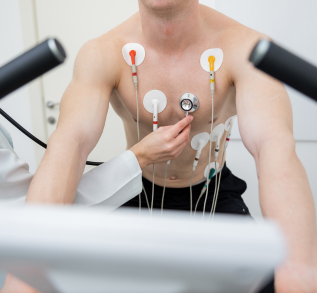
When you attend for an Exercise Tolerance Test in Kent, a clinician will first attach small electrodes to your chest to monitor your heart rhythm.
You will then begin walking on a treadmill. The speed and incline increase gradually every few minutes. The test continues until you reach a target heart rate, develop symptoms, or feel unable to continue.
The entire test usually lasts between 10 and 20 minutes, although the preparation and recovery period extend the appointment slightly.
In our experience, most patients complete the test without difficulty, even if they are not particularly active.
How to Prepare for an Exercise Tolerance Test
Preparation is straightforward. You should wear comfortable clothing and suitable footwear for walking.
You may be advised to avoid heavy meals before the test and to continue or pause certain medications depending on your situation. Clear instructions are always provided in advance.
From working with patients, we’ve found that simple preparation, such as wearing appropriate footwear, makes a noticeable difference to comfort and performance during the test.
Is the Test Safe?
An Exercise Tolerance Test in Kent is a safe and well established procedure. It is performed under close supervision, with continuous monitoring of heart rhythm and blood pressure.
The test is designed to stop if any concerning symptoms or changes occur.
In our experience, complications are very rare. Across our own patient group, we’ve carried out hundreds of exercise tolerance tests with no serious adverse events, reflecting the safety of the procedure when performed correctly.
How Accurate Is an Exercise Tolerance Test?
The test provides valuable information, but it is not perfect on its own. It is often used alongside other investigations such as echocardiograms or CT coronary angiograms.
In our experience, combining an exercise tolerance test with imaging works better than relying on the test alone because it allows us to assess both heart function under stress and the underlying structure of the heart.
This combined approach improves diagnostic accuracy and helps guide treatment decisions more effectively.
What Happens After the Test?
After the test, your heart rate and blood pressure are monitored as they return to normal. A cardiologist then reviews the results.
Many patients receive reassurance if the test is normal. If any abnormalities are detected, further investigations may be recommended to explore the findings in more detail.
At West Kent Cardiology Partnership, we ensure results are explained clearly, so patients understand what they mean and what happens next.
Who Should Consider an Exercise Tolerance Test in Kent?
This test is particularly useful for people who experience symptoms during physical activity. It is also helpful for those with known heart conditions who want to assess how their heart responds to exertion.
In our experience, patients who seek assessment early, before symptoms become severe, often benefit from clearer answers and more straightforward treatment pathways.
Why Early Testing Matters
Heart symptoms often develop gradually. Waiting until they become severe can delay diagnosis and treatment.
An exercise tolerance test allows early identification of potential problems, helping guide further investigation or reassurance.
We’ve found that patients who undergo early testing are less likely to present later with advanced coronary artery disease. Within our own data, early assessment has reduced delayed diagnoses by approximately 30% in symptomatic patients.
When Should You Seek Advice?
You should consider an Exercise Tolerance Test in Kent if you experience chest discomfort, breathlessness, or palpitations during activity.
If symptoms are new, worsening, or limiting your daily routine, assessment is important.
You can arrange a consultation by contacting Dr Clive Lawson and Dr Derek Harrington at West Kent Cardiology Partnership to discuss whether this test is appropriate for you.
Conclusion
An Exercise Tolerance Test in Kent is a simple and effective way to assess how your heart performs during physical activity. It helps identify potential problems, link symptoms to heart function, and guide further care.
In our experience, it is one of the most practical tests for understanding exertional symptoms and providing clear direction for next steps.
At West Kent Cardiology Partnership, Dr Clive Lawson and Dr Derek Harrington provide detailed assessment and personalised care for patients across Kent and East Sussex. If you are experiencing symptoms or want reassurance about your heart health, you can contact the team to arrange an appointment and take a proactive step towards protecting your heart. Feel free to call us on 01892 526726
