

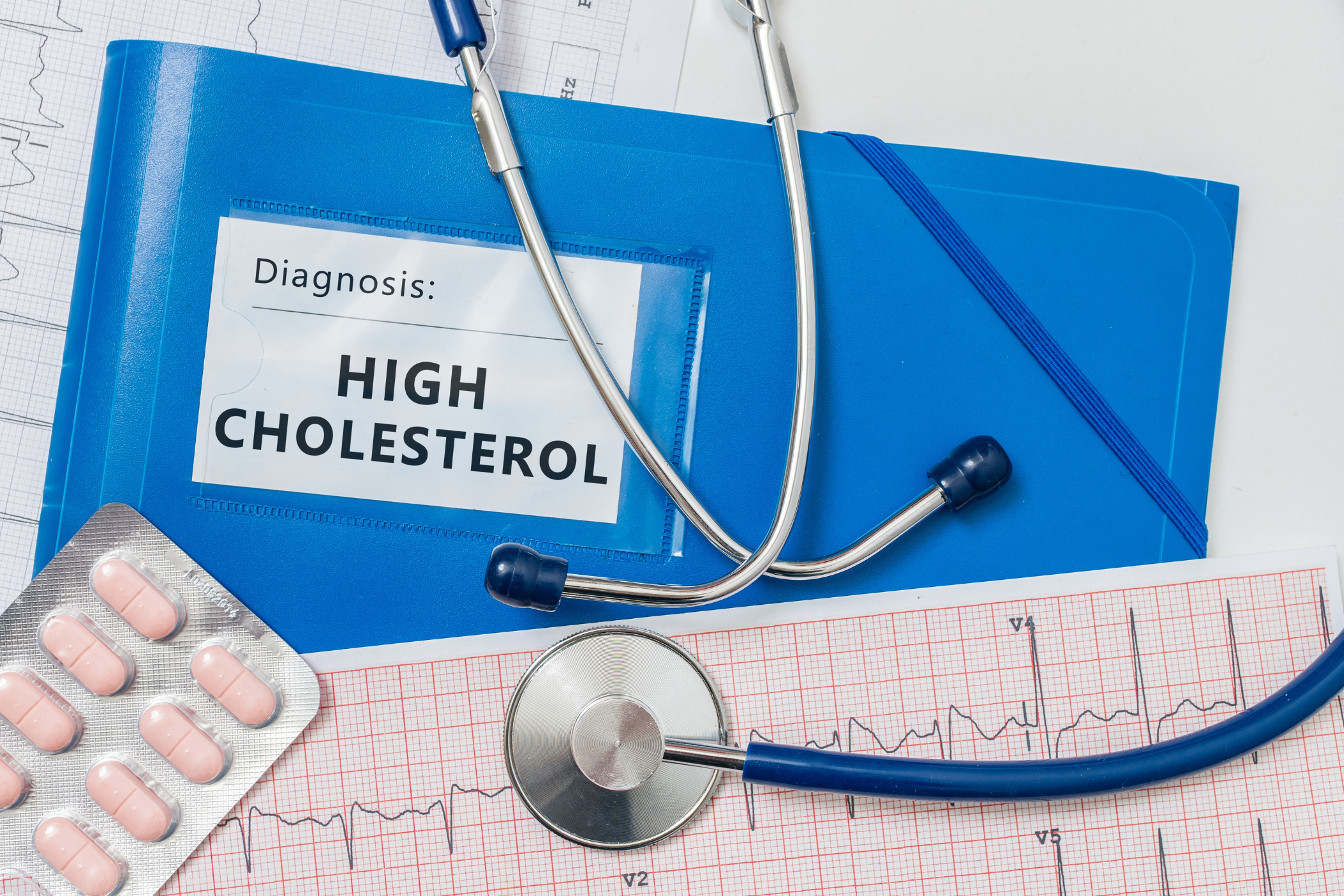
What is High Cholesterol?
High cholesterol means having too much of a fatty substance called cholesterol in your blood. Cholesterol itself is not harmful. Your body needs it to build cells, make hormones, and produce vitamin D. The problem arises when there is too much of the wrong type circulating in the bloodstream, because over time it builds up inside the walls of your arteries, narrowing them and making a heart attack or stroke more likely. High cholesterol is one of the most important and most treatable risk factors for heart disease, and crucially it produces no symptoms, so the only way to know you have it is a simple blood test.
In our experience at our Warwick Park rooms in Tunbridge Wells, high cholesterol is one of the most common findings we identify during cardiac assessments, and one of the most rewarding to manage because the risk it carries can be substantially reduced. From working with patients across Kent and East Sussex since 2006 at West Kent Cardiology Partnership, we have found that many people are surprised to learn their cholesterol is raised, because they feel completely well and often have a healthy weight and reasonable diet. This is exactly why cholesterol deserves attention, as it works silently in the background for years before causing any obvious problem.
What cholesterol actually is
Cholesterol travels around the body in the blood attached to proteins, and these packages are called lipoproteins. There are two main types that matter.
Low-density lipoprotein, or LDL, is often called bad cholesterol. It carries cholesterol to the tissues, and when there is too much, it deposits in the artery walls and drives the furring-up process known as atherosclerosis. High-density lipoprotein, or HDL, is often called good cholesterol, because it carries excess cholesterol away from the arteries and back to the liver to be removed.
Most UK clinicians now focus on non-HDL cholesterol, which captures all the harmful, artery-narrowing types in a single figure, along with the ratio of total cholesterol to HDL. In our experience, this fuller picture works better than looking at total cholesterol alone, because two people with the same total cholesterol can carry very different levels of risk depending on how much is LDL and how much is protective HDL.
What counts as high cholesterol
For a healthy adult, total cholesterol is generally considered ideal below 5 mmol/L, with LDL below 3 mmol/L and HDL above 1 mmol/L. Total cholesterol between 5 and 7.5 mmol/L is raised, and a level above 7.5 mmol/L is significantly elevated and raises the possibility of an inherited cause.
These are general figures for people without established heart disease. For anyone who already has cardiovascular disease or diabetes, the targets are considerably lower, because reducing cholesterol further in these groups produces a measurable reduction in future heart attacks and strokes.
Why high cholesterol matters
The reason cholesterol is so important is atherosclerosis. Excess LDL cholesterol gradually builds up inside the walls of the arteries, forming plaques that narrow the vessel and reduce blood flow. In the coronary arteries that supply the heart, this can cause angina and, if a plaque ruptures and a clot forms, a heart attack. In the arteries supplying the brain, the same process can cause a stroke.
When these blockages become significant, treatment may involve procedures to restore blood flow, which is why understanding the difference between a stent and a bypass matters to many of the patients we treat for advanced coronary disease. From working with patients, we have found that the earlier cholesterol is addressed, the less likely it is that these more invasive treatments are ever needed.
What causes high cholesterol
Several factors contribute. Diet plays a part, particularly foods high in saturated fat. Being overweight, physically inactive, smoking, and drinking more than the recommended 14 units of alcohol per week all tend to worsen the cholesterol profile by raising LDL and lowering protective HDL. Increasing age and certain medical conditions such as an underactive thyroid, kidney disease, and diabetes also raise levels.
Genetics matters too, and this is often underappreciated. Some people inherit a tendency to high cholesterol regardless of how healthy their lifestyle is.
Familial hypercholesterolaemia
Familial hypercholesterolaemia is an inherited condition that causes very high LDL cholesterol from birth. It affects around 1 in 250 people in the UK, which amounts to more than 260,000 people, yet fewer than 10 percent have been formally diagnosed. Without treatment, it carries a high risk of early heart disease, because the arteries are exposed to damaging cholesterol levels for a lifetime rather than a few years.
An LDL cholesterol above 4.9 mmol/L, or a total cholesterol above 7.5 mmol/L, particularly alongside a family history of early heart disease, should raise suspicion. In our experience, identifying familial hypercholesterolaemia is one of the most valuable things a cardiology assessment can do, because when we diagnose it, screening first-degree relatives frequently uncovers others in the family who have it but do not yet know.
Symptoms of high cholesterol
In almost all cases there are no symptoms whatsoever. High cholesterol does not make you feel unwell, which is precisely why it is so often missed. Occasionally, very high inherited levels produce visible signs such as fatty lumps around the eyes or tendons, but these are the exception rather than the rule. The absence of symptoms is the strongest argument for testing.
How high cholesterol is diagnosed
Diagnosis is straightforward and relies on a cholesterol test, a blood test that measures total cholesterol, LDL, HDL, and triglycerides. As part of a wider cardiac assessment we combine this with an ECG, an echocardiogram, and where appropriate a CT coronary calcium score to look directly for early signs of atherosclerosis in the coronary arteries. All of these are included in our HeartScreen programme, which takes around two hours at our Tunbridge Wells clinic.
How high cholesterol is treated
Treatment always starts with lifestyle. Reducing saturated fat, eating more fibre, losing excess weight, exercising regularly, stopping smoking, and moderating alcohol can all improve cholesterol meaningfully, and we cover this in more detail in our guide to lifestyle factors and heart health. Where lifestyle alone is not enough, or where risk is high, medication such as statins is highly effective at lowering LDL cholesterol and reducing the risk of heart attack and stroke.
In our experience, combining lifestyle change with medication works better than relying on either one alone for patients at higher risk, because lifestyle addresses the underlying drivers while medication delivers the reliable LDL reduction that the evidence shows saves lives. From working with patients, we have found that those who understand why they are taking a statin, rather than simply being handed a prescription, are far more likely to keep taking it and to see the long term benefit.
When to see a cardiologist
You should consider an assessment if your cholesterol is raised, if you have a family history of early heart disease or high cholesterol, if you already have other risk factors such as high blood pressure or diabetes, or if you simply want a clear picture of your cardiovascular risk. Everyone over 40 is entitled to an NHS Health Check, but a fuller cardiac assessment provides considerably more detail.
Conclusion
High cholesterol is a common, silent, and highly treatable risk factor for heart disease. It causes no symptoms, so a blood test is the only way to detect it, and left unchecked it drives the artery-narrowing process that leads to heart attacks and strokes. The good news is that with a combination of lifestyle change and, where needed, medication, the risk can be reduced substantially.
If you would like your cholesterol and overall heart health properly assessed, particularly if you have a family history of heart disease, you can contact us, Dr Clive Lawson and Dr Derek Harrington at West Kent Cardiology Partnership, to arrange a consultation at our Tunbridge Wells clinic, or call us directly on 01892 526726.
