

What Is Long QT Syndrome?
Long QT syndrome is a condition that affects the electrical system of the heart. It causes a delay in how the heart recharges between beats, which can increase the risk of abnormal heart rhythms. These rhythm changes can sometimes lead to fainting, seizures, or in rare cases, sudden cardiac arrest. Patients who have been diagnosed with long QT syndrome, as well as those who are being investigated after symptoms such as blackouts or palpitations. This guide will help explain what long QT syndrome is, why it matters, and how it is diagnosed and managed.
How the Heart’s Electrical System Works
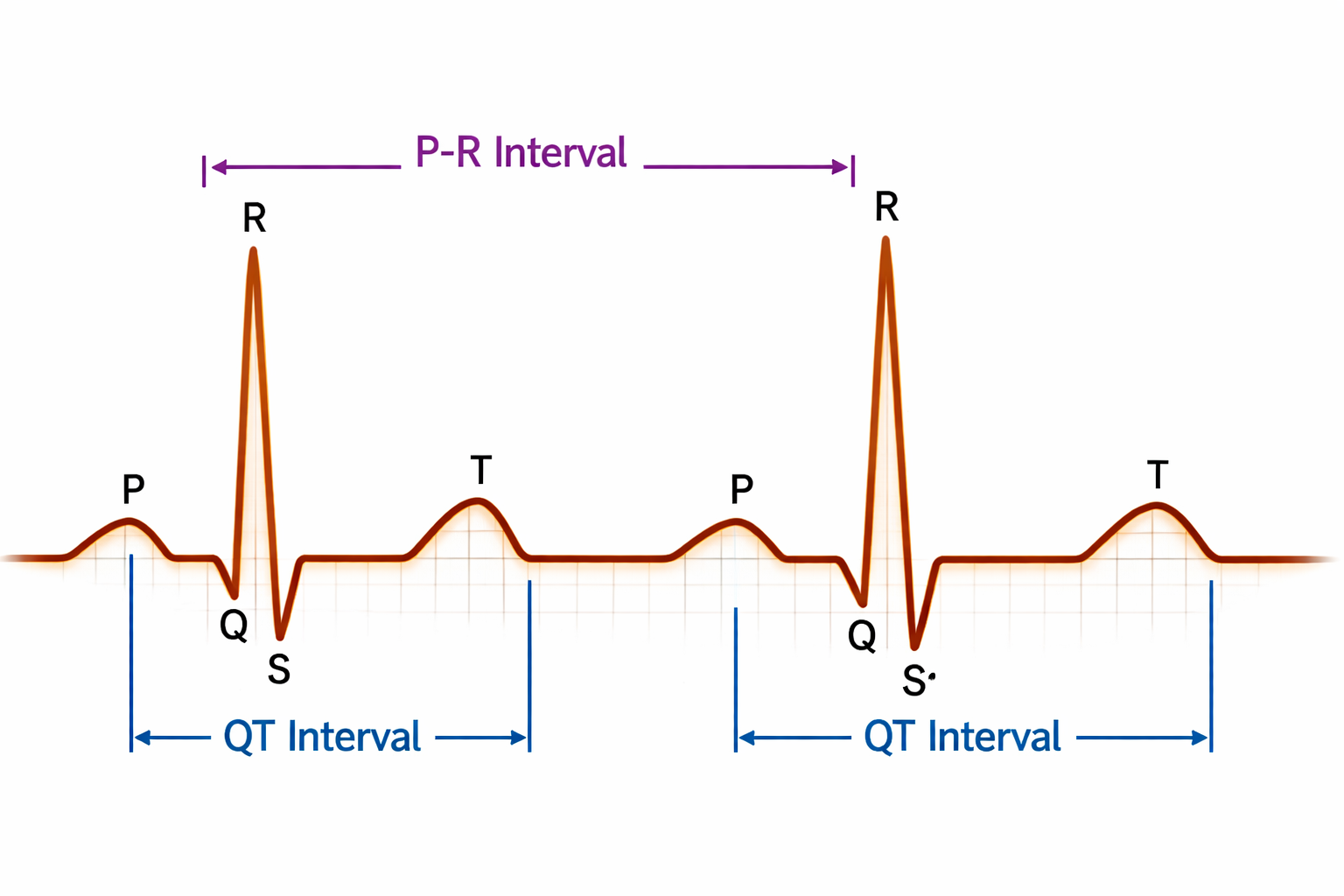
Every heartbeat starts with an electrical signal. This signal travels through the heart in a precise pattern, telling the heart muscle when to contract and when to relax. After each beat, the heart’s cells need time to reset before the next signal arrives. This reset phase is known as repolarisation. On an ECG, this process appears as part of the QT interval. In a healthy heart, the QT interval stays within a normal time range. In long QT syndrome, this interval lasts longer than it should, meaning the heart takes extra time to reset between beats.
What Does “Long QT” Mean?
The term “QT” refers to a specific section of the ECG trace. It represents the time taken for the heart’s lower chambers to contract and then recover ready for the next beat. When this interval becomes prolonged, it increases the chance that dangerous rhythm disturbances can develop. These rhythms can cause the heart to beat chaotically for short periods, which may reduce blood flow to the brain and body. Not everyone with a long QT interval will experience symptoms, but the risk remains present, which is why careful assessment is important.
Types of Long QT Syndrome
There are two main forms of long QT syndrome.
Inherited long QT syndrome
This form is passed down through families. It is caused by changes in specific genes that affect how electrical signals move through heart cells. People may inherit the condition even if no one else in the family has previously been diagnosed.
Acquired long QT syndrome
This form develops later in life. It is usually caused by certain medications, electrolyte imbalances, or medical conditions. Drugs that affect heart rhythm, severe vomiting or diarrhoea, and very low potassium or magnesium levels can all prolong the QT interval.
Symptoms of Long QT Syndrome
Symptoms vary widely. Some people never experience any symptoms and only discover the condition during routine testing. Others may have noticeable episodes. Some of these common symptoms include fainting, which often occurs during exercise, emotional stress, or sudden loud noises. Some people experience seizures that are actually caused by abnormal heart rhythms rather than epilepsy. Palpitations or sudden dizziness can also occur. In rare cases, a dangerous rhythm disturbance can lead to sudden cardiac arrest. This risk is why long QT syndrome requires careful assessment, even when symptoms seem mild.
What Triggers Symptoms?
Triggers depend on the type of long QT syndrome. In inherited forms, exercise, excitement, or stress often act as triggers. Swimming and sudden exertion commonly feature in symptom histories. In acquired long QT syndrome, triggers usually relate to medication use or electrolyte disturbances. Identifying and removing the trigger often reduces risk significantly. Understanding personal triggers plays a key role in managing the condition safely.
How Long QT Syndrome Is Diagnosed
Diagnosis usually starts with an ECG, which measures the QT interval. Because QT length can change over time, more than one ECG may be needed. Some patients also require longer heart rhythm monitoring or exercise testing. Blood tests help check electrolyte levels and rule out reversible causes. If inherited long QT syndrome is suspected, genetic testing may be recommended. Family members may also need screening, as the condition can affect relatives who have no symptoms. Guidance from organisations such as the British Heart Foundation and the NHS supports this approach to diagnosis and family screening.
Why Long QT Syndrome Is Taken Seriously
A prolonged QT interval increases the risk of a specific dangerous rhythm called torsades de pointes. This rhythm can start suddenly and may stop on its own or progress to more serious rhythms. Early diagnosis allows steps to be taken to reduce this risk. Many people with long QT syndrome live normal lives once they understand their condition and follow an appropriate management plan.
How Long QT Syndrome Is Managed
Management depends on the type of long QT syndrome and the level of risk. In acquired cases, treatment often focuses on stopping the medication responsible or correcting electrolyte imbalances. For inherited long QT syndrome, treatment usually involves medication that helps stabilise heart rhythm. Beta blockers are commonly used and are very effective for many patients.In higher risk cases, additional treatments may be recommended. These can include implantable devices that correct dangerous rhythms automatically. Lifestyle advice also plays an important role, particularly around exercise, stress, and avoiding known triggers.
At West Kent Cardiology Partnership, management plans are tailored to each individual. We take into account symptoms, lifestyle, family history, and test results.
Living With Long QT Syndrome
Living with long QT syndrome requires awareness rather than restriction. Most people can continue normal daily activities with some sensible precautions. Avoiding specific medications is important, as many common drugs can lengthen the QT interval. Patients are usually given clear guidance on which medicines to avoid. Regular follow up helps ensure treatment remains effective and risk stays low. a heart screening can also provide reassurance and early protection for relatives.
When to Seek Medical Advice
You should seek medical advice if you experience unexplained fainting, seizures, or sudden dizziness, especially during exercise or stress. Palpitations that feel fast or irregular also warrant assessment. Anyone diagnosed with long QT syndrome should attend regular reviews. New symptoms or changes in health should prompt a reassessment. You can contact us here to arrange an assessment or discuss concerns about long QT syndrome.
Outlook for Long QT Syndrome
The outlook for long QT syndrome has improved greatly over recent years. Early diagnosis, effective medication, and clear lifestyle guidance have reduced serious complications significantly. Most people with the condition live full and active lives. Understanding the condition and following medical advice makes the greatest difference to long term safety.
Conclusion
Long QT syndrome affects the heart’s electrical recovery between beats and can increase the risk of dangerous heart rhythms. While the condition can sound alarming, effective treatments and careful management greatly reduce risk. For patients in Kent, we provide thorough assessment, clear explanations, and long term support for patients with long QT syndrome across Kent and East Sussex. If you have symptoms, a family history, or concerns about this condition, you can call us on 01892 526726 to arrange a consultation and discuss next steps with a specialist.
